
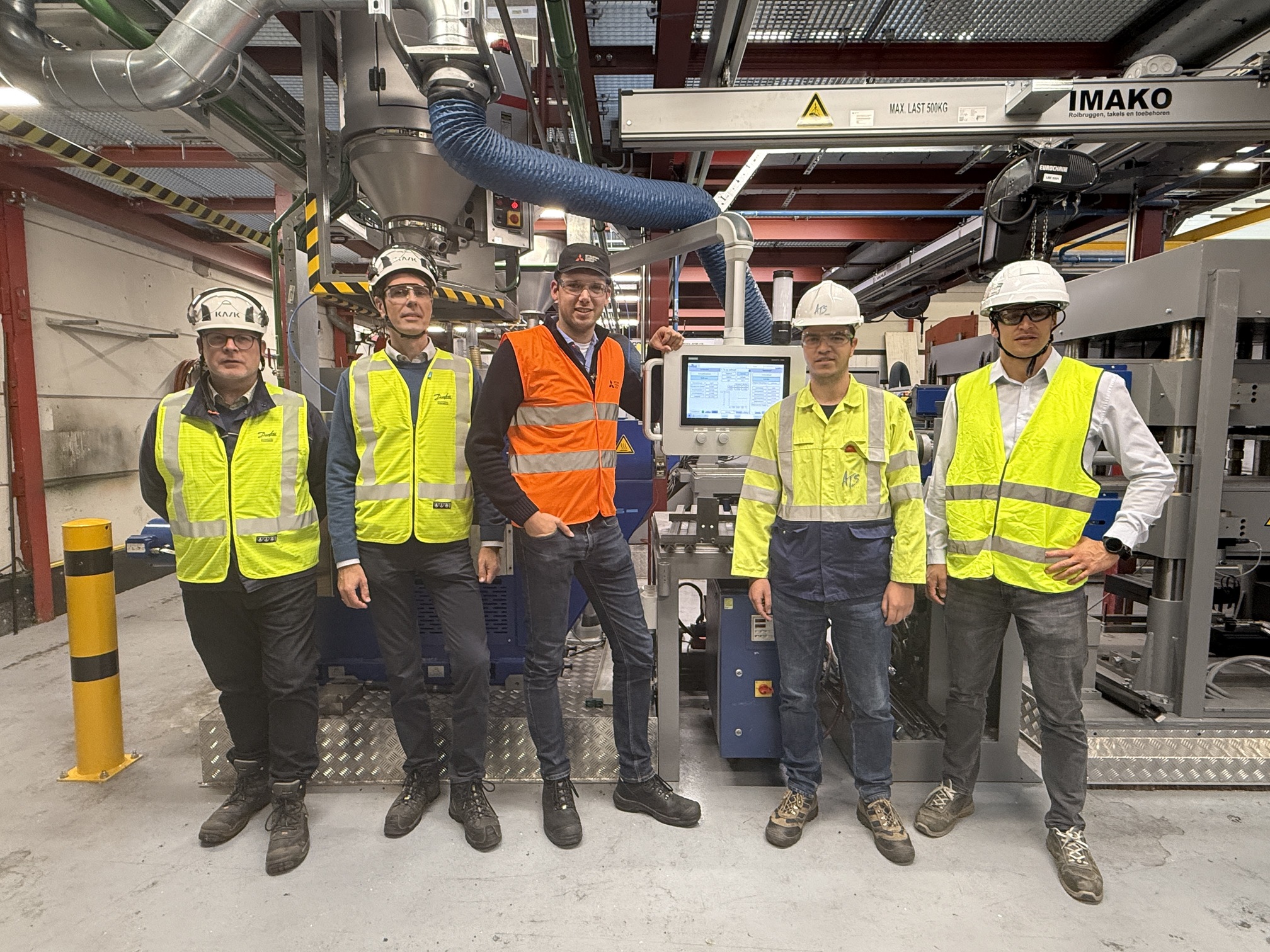
Anyone looking at the top ten largest chemical giants in the world will come across this striking name. Mitsubishi may be known to the general public for its cars or heat pumps, but the Japanese group also enjoys a reputation in the chemical industry. From its base in Tielt, Mitsubishi Chemical Advanced Materials produces ultra-technical plastics using extrusion. However, extrusion is a very specific process that must run continuously. Downtime is therefore out of the question. ATS helped develop a new electrical standard for retrofits, proved itself with the conversion of several extrusion lines, and also solved a drive problem in record time with the introduction of Danfoss' IC7.
PET, PEEK, POM C/H, TORLON... If you're not familiar with the world of plastics, this list of abbreviations probably doesn't mean much to you. "What we make here is the cream of the crop in the plastics world," explains Michiel Vanderperre, Automation Project Engineer at MCAM. "These are plastics that end up in demanding applications. Think of aerospace, wind turbines, semiconductor production, etc. We can be proud of what we produce here, because there are only a handful of companies worldwide that can do it."
Extrusion
This is done by means of extrusion: a process that ideally runs 24/7. "Because it takes a lot of time to produce. Once a year, production here shuts down for two weeks. In between, we prefer not to see any downtime." MCAM has 55 extrusion lines of various types in Tielt. Some even date back to the 1960s. Guaranteeing reliability is becoming increasingly difficult. At the same time, space is being made on the company premises to install six new extrusion lines and increase capacity to 11,000 tons. "They believe in what we do here. My main task is therefore to bring our entire factory into the21st century. And that starts with standardization. If the basis is always the same, operation and maintenance become a lot easier," says Vanderperre.
Generic electrical diagram
ATS was tasked with developing a generic electrical diagram that would serve as the reference for every line going forward: for the retrofitting of the old lines and the construction of the new ones. "On the one hand, we wanted to guarantee reliable operation and, on the other hand, we wanted to have solid control over the line in terms of processes. We want to see what the lines are doing so that we can manage them accordingly." For the Automation BU and project leader Frederik Laevens, this was their first encounter with MCAM. However, they did have experience with the ATS Group: the Medium Voltage BU, VDC Roeselare (electrical components), and Ohmewatt (electrical resistors) were already well known in Tielt. "The first time is always a bit of a search: what is important to the customer and how can we best install it? We start from the existing situation. All the functions that the lines had were listed as a kind of menu. In consultation with the customer, we were then able to determine what would be standard for all lines and what is specific to each line."
ATS and Danfoss: partners in variable speed control
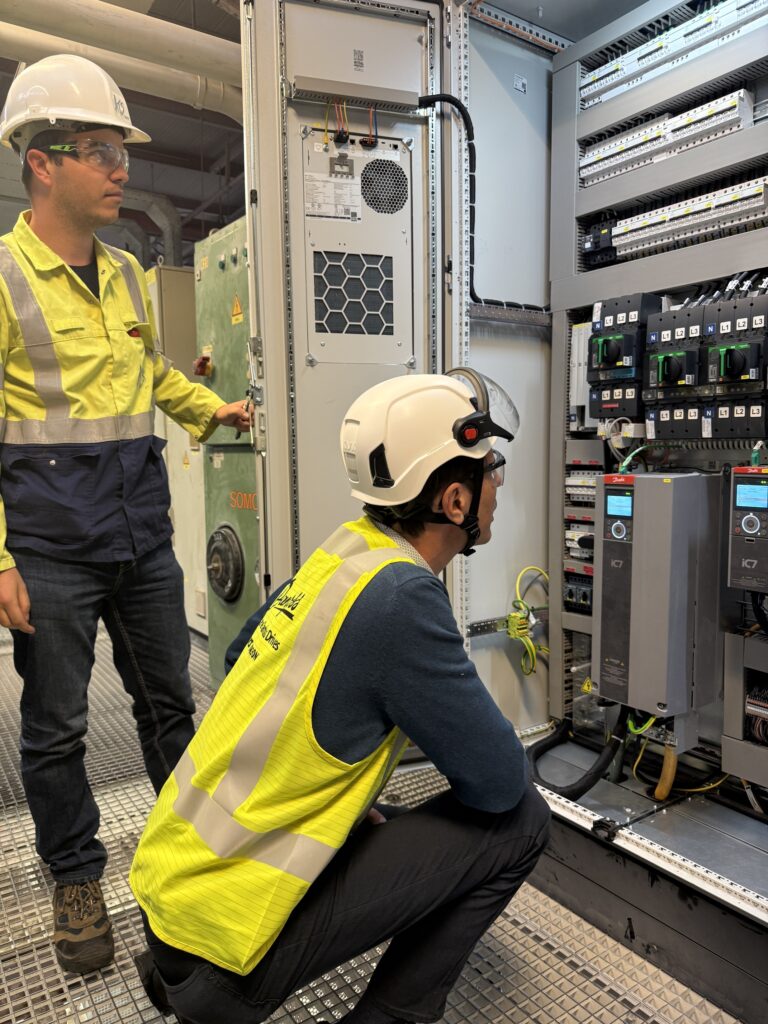
ATS and Danfoss now know what it means to work together. For years, they have been working together to provide customers with the best possible solutions in the field of variable speed control. A collaboration that was sealed with an official partnership in 2023. Danfoss Application Manager Benelux Kurt Muylaert: "We may be a manufacturer, but above all we want to make a difference with our application knowledge and support. That's why it's so important to work with a partner like ATS. They are the extension of our technical knowledge on the customer's shop floor for all first-line support: from advice to maintenance and repairs."
From standard to conversion
Not an obvious tangle to untangle. Depending on the plastic and the desired thickness, the extrusion process can vary enormously. Laevens: "By selecting and combining functional blocks, various configurations of extrusion lines can be built in a standardized way. And that pays off. Where three switch boxes were sometimes needed in the past, this can now be done in a much more compact way." ATS was then given the opportunity to prove this in practice with its newly developed standard: it was awarded the contract to build an extrusion line. Everything went smoothly. The success led to a new order for the retrofit of two virtually identical lines (lines 13 and 15). "You always encounter a few issues. But it helps that you have a lot of services in-house. For example, our Mechatronics team was responsible for the mechanical modifications to the frame and belt drive to fit the new motor into the existing frame of the extruder," says Laevens.
Drive issues
However, when converting the next line, a 'new' problem arose. Vanderperre explains where the problem lay. "Extrusion is a low-speed process that requires high torque. As a result, many frequency converters fail. The line in question involved the smallest motor we have here, which made control even more challenging. The manufacturer had provided a workaround by adding an encoder, but the line had never really worked as we had intended. It caused problems, especially during start-up." This was no different after the conversion: the motor would not run. The drive manufacturer was unable to solve the problem after four days, so MCAM consulted ATS.
Engine control makes a difference
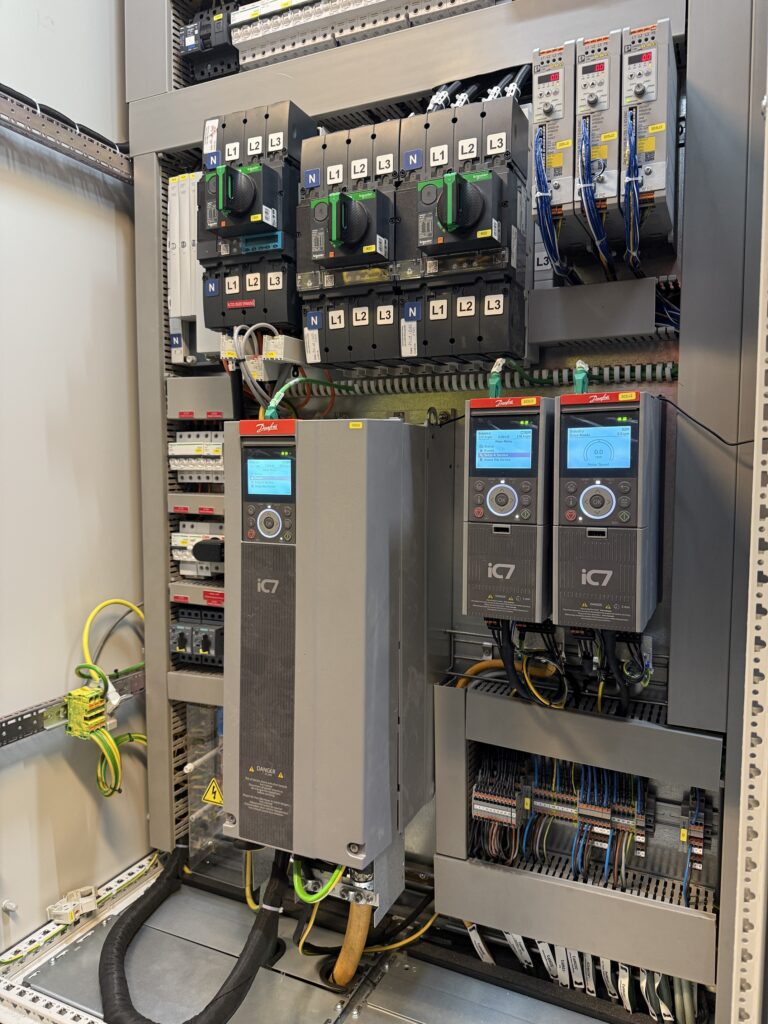
The emergency call ultimately landed with Gianni De Greve, Danfoss account manager at ATS. Since 2023, ATS has been an official partner of Danfoss Drives. De Greve serves as the liaison. "I try to match customers' challenges with the right technical solution. I knew right away that for a technically challenging application such as MCAM's, IC7 drives are often the answer." The Danfoss team was ready and headed to Tielt together with ATS. Vanderperre was given a presentation of the technical capabilities of the IC7 series in record time. One test project later, it had more than proven itself. "Thanks to the superior motor control of the Danfoss IC7, even at low speeds, we were able to control the motor in open loop, i.e. without an encoder, under conditions that were many times higher than expected," explains Koen Schiettekat, key account manager at Danfoss.
iC7 Automation
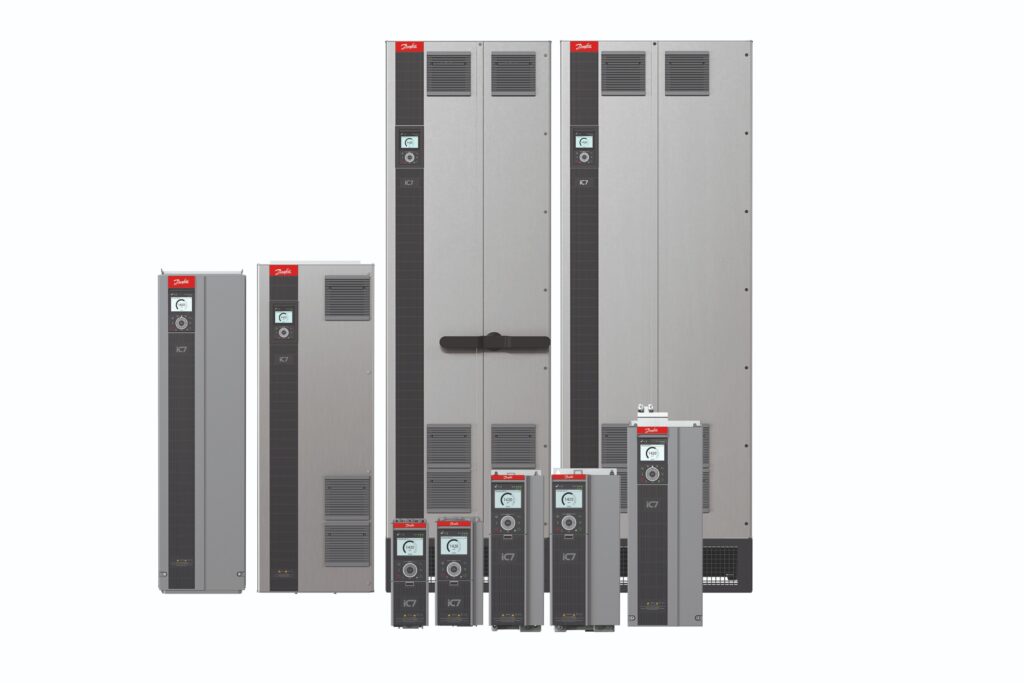
The choice of the iC7-Automation frequency converter was no coincidence. This frequency converter is specifically designed for demanding applications such as those at MCAM, where precise motor control with high torque is crucial. The power of the iC7 lies in its superior motor control, which delivers exceptional performance even without encoder feedback – in open loop. In addition, the drive is 'secure by design' thanks to a built-in crypto chip, which is essential in the context of Industrial IoT and the future-proof standardization that MCAM strives for. The modular and compact design also ensures a small footprint, while the wide power range and flexible configuration options mean that the drive can be customized for virtually any extrusion line.
Be at the forefront
Vanderperre can only agree. After less than four hours, the line was running at full capacity with the new drives. The two new lines that are currently planned will also be equipped with IC7 drives. What did Vanderperre like so much about the collaboration? "When I ask ATS to build a new board, they do it according to the rules of the art. That in itself is quite an achievement these days. But they also make sure that the board is installed, that all the wiring is in order, that the motor is correctly adjusted... That makes it such a good match with a company like ours that wants to move quickly. What's more, they keep their finger on the pulse of new technology. Because we are the market leader in what we do, we also expect our partners to be at the forefront. They have proven this with the Danfoss drive. But I was also very impressed by what I saw at the ATS Discovery Days," concludes Vanderperre.


