

Safety first
panel building is a discipline they master to perfection at ATS. The experience and expertise are spread across six branches throughout Belgium. In Kruisem, the focus is on project-based panel building. In a recent project, the team once again demonstrated its skills with a challenging retrofit of an outdated installation in a very limited space. Everything is now state-of-the-art, including extra built-in safety devices. ATS also signed up for a Belgian first with the installation of an arc flash system.
A low-voltage switchboard is the heart of every factory. After all, from here the necessary electrical power is distributed to the various machines and production lines. In sectors where every minimal disruption to the production process has an enormous impact, it is important to guarantee the reliability of the power distribution. For a Belgian company active in petrochemicals, it was crucial that during the revamp of their low-voltage switchboard , all possible safety and precautionary measures were taken to minimize both the risks of failure and to maximize personal safety. In parallel with the revamp of the low-voltage board, ATS also took on the complete renovation of one of the MCCs (motor control centers) behind it. The MCC was equipped with a smart motor management system so that the control of motors in the production process can remain safe and reliable.

Only one week for conversion
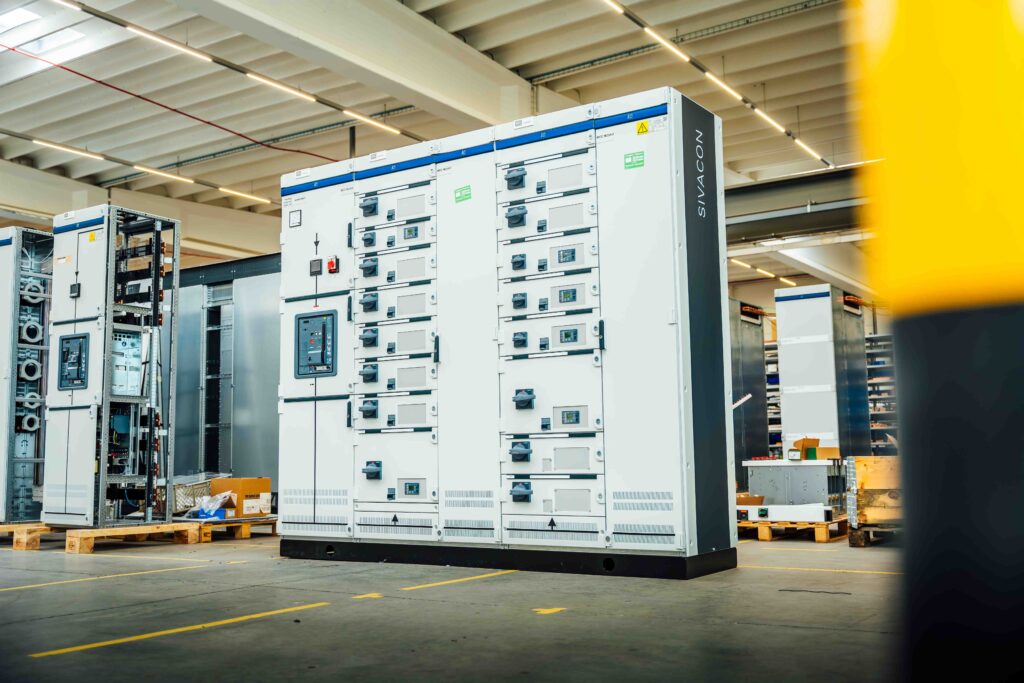
"A retrofit is about replacing an outdated installation with a completely new installation equipped with the latest technology. In doing so, the design of the new installation matches that of the existing installation as closely as possible. This minimizes adjustments and makes the conversion and reconnection of the existing cables as efficient and smooth as possible. The starting point is to keep the conversion time from old to new as short as possible," explains account manager Electrical Panels A.T.S. nv Anthony Mertens. A maxim that was all the more important here because of the limited time frame: the entire conversion from the old to the new board had to be completed in a week. "The big challenge in this project was to build the same installation within the same footprint but with much more attention to safety in all senses of the word, which has the major consequence that there are many more components, compartmentalization, ... involved. Achieving something like that is not easy in an installation that is already well stocked."
Isolated bar sets
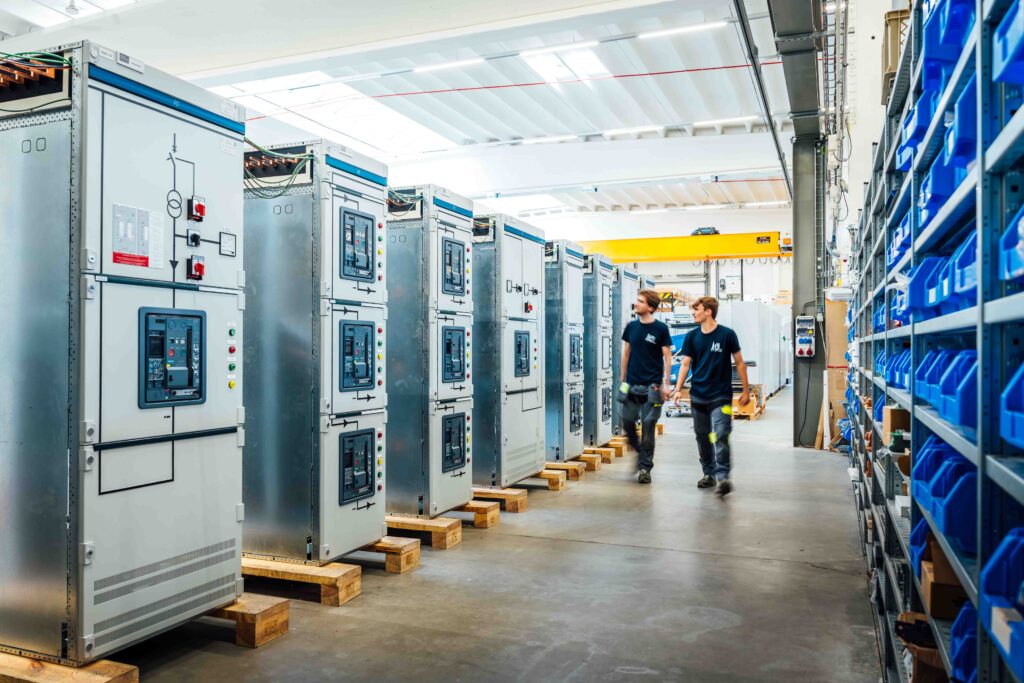
This was a 25-year-old installation. Based on the current design, ATS chose the Siemens Sivacon S8 ALSB to give new functionalities that are 100% compatible with the existing situation. "You want to avoid an arc at all times. One way to minimize the risk of an arc is to isolate the copper bar assemblies. This is done by taping each phase individually with an insulating tape. This tape ensures a high degree of insulation between the phases, which minimizes the risk of an arc occurring due to a short circuit," explains Hendrik Merckx.
Mobile units
What also changed from the old boards is the choice of drive-out units. "That way you can drive the switches or drawers out of the board, even when the distribution board is live, without tools and without safety risks. This will improve operational reliability," Merckx predicts. "Of each type of drawer, the customer keeps one in stock. They can then immediately replace it in case of failure and send the entire slide for repair. So on the customer's side, the necessary measures were also taken to have an operationally safe installation." There were still details in ATS ' design to incorporate redundancy . For example, two separate transformers feed the board. If one fails, due to breakdown or for maintenance, the other transformer can still fully power the board via a coupling switch.
4B compartmentalization
It didn't stop there to achieve safe, reliable operation. Merckx: "A second method of achieving the highest possible protection for people and plant is to compartmentalize the board. In this situation, the highest grade of compartmentalization was chosen, specifically 4B. This indicates that the bar rig is completely set up in its own isolated 'box,' just as the switchgear has its own box and the connection flags.
Integrated arc protection
So far, these were technical issues that recur in many projects and that a specialist like ATS has a good grasp of in order to achieve safe and reliable installations. For this project, however, they went a step further by integrating an arc flash system. This serves as an additional measure in case an arc should still occur after taping the bar system. The system detects crustal fluxes and flashes of light. Mertens: "The electronic protections in the circuit breakers, depending on the settings, will interrupt a short circuit after 30 to 50 milliseconds. When an arc flash system is added, the overall response time can be shortened even further."
Reduced shutdown time provides more freedom
This solution responds within 5 to 10 milliseconds as soon as a flash of light and the corresponding rise in current are detected. The system then immediately triggers switch-off. "The reduced shutdown time may seem minimal, but the application of an arc flash system can contribute significantly to reducing damage and increasing personnel safety by greatly reducing exposure time to arcs. These are compact boards, with a lot of copper and Plexiglas in them. Then you have to make sure that the light sensors are in the right position, so that any arc that may occur in the board is detected," Mertens clarifies.
Modern communications for more analysis capabilities
And, of course, the installation received all the gadgets one would expect in a modern production environment. "In the past, measurement coils were mainly used at tactical locations on the bar sets. These were then read out on analog meters or network analyzers on the distribution board. There was not enough room for that here and, moreover, smarter technology is now available. Communication, measurements, switch positions, etc. are today integrated into smart power switches. These are connected to a network so the user can read the current and voltages and even switch them on and off remotely. This gives more analysis capabilities. The customer doesn't want to get into this right away yet. But by providing everything already, we deliver a future-proof installation," says Mertens.
Successful thinking exercise
"It was a technically very challenging project. A first installation of this caliber, also for this client," Merckx summarizes. "But the great thing was that we found each other to do that thinking exercise together to come up with the best possible solution." At the end of 2024, the race against the clock began, but the key was in good preparation. "Since the start of the project, we were in weekly consultation with the customer. The low-voltage board consists of nine separate cells, 8 meters in total. We brought them in cell by cell and then interconnected them and tested them on site. There was no margin for error. But we succeeded in our mission well before our deadline," Mertens concludes.
